
Gemini 4 Argon for Cybersecurity Teams: Build an AI-Assisted Patch-Readiness Service Only If You Have Access
Google has announced Gemini 4 Argon for complex work and defensive cybersecurity, but access remains restricted. Learn what an authorised, human-checked patch-readiness service could look like for East African software teams.
UniqueTechCamp Editorial Desk
Business Technology Editor • UniqueTechCamp Engineering Unit
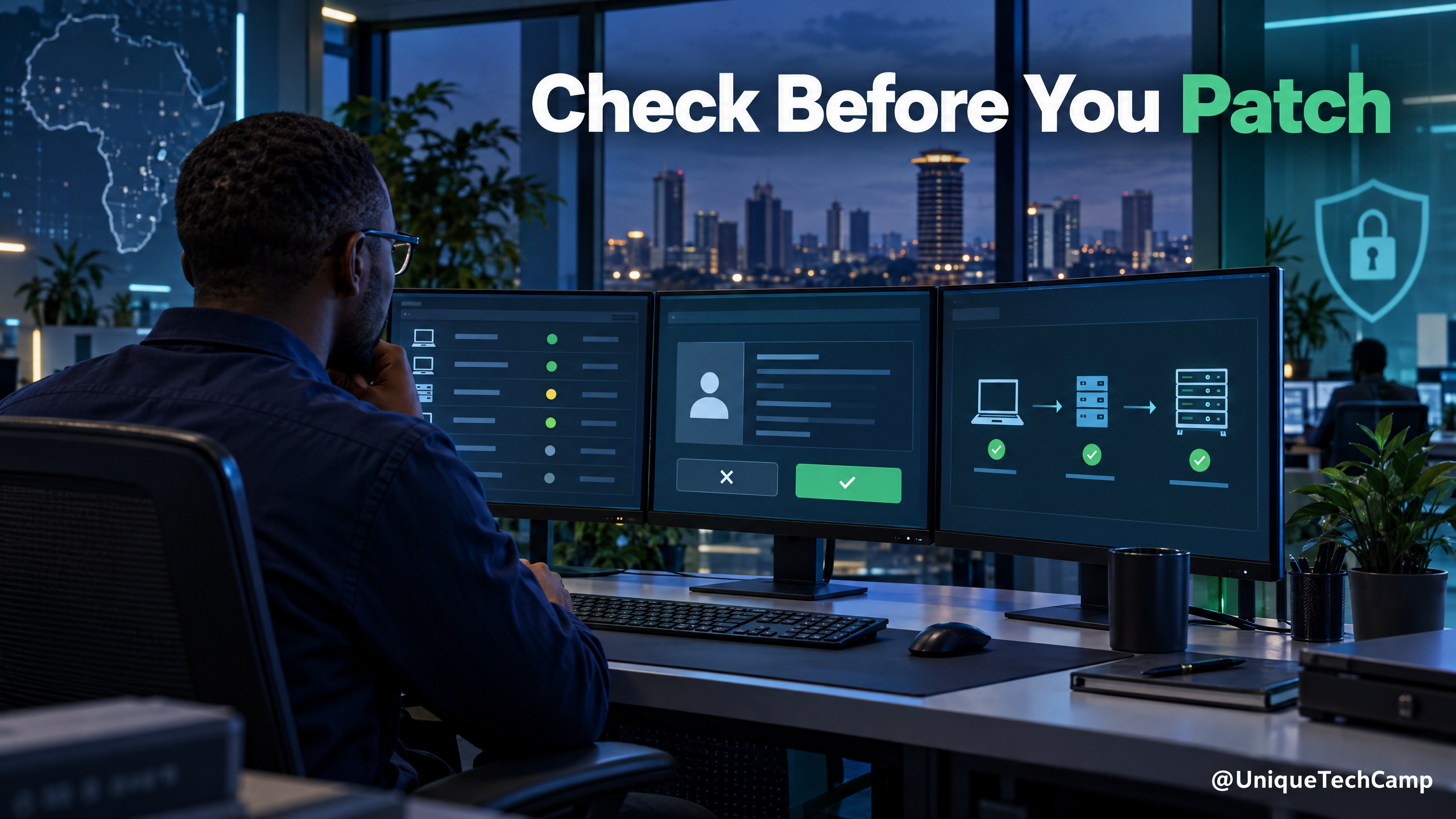
An AI model that can help investigate and patch a software flaw sounds attractive to a small software company with a limited security team. The important detail about Google’s Gemini 4 Argon announcement is not only what the model might do; it is who can use it today.
Google announced Argon on 30 September 2026, describing it as a frontier model for complex software engineering, enterprise knowledge work and cyber defence. Google says the model supports a 1-million-token output limit, up from 64,000, and reports strong results on selected coding and professional-work evaluations. Those measurements are Google’s own claims. 1 Reuters independently reported the announcement and the restricted initial rollout, and noted that Argon lagged on some of the benchmarks in Google’s release. 4
As at 3 October, Google says Argon is rolling out to trusted cyber defenders through its Fairwind programme while it strengthens safeguards; it has not provided a public release date. The currently fetched Gemini API model catalogue and pricing table do not list Argon. Google has announced introductory API prices of US$2 per million input tokens and US$10 per million output tokens, with cached input 95% off, followed by higher rates after an introductory period—but the announcement does not state that period’s duration or quotas. Treat these as announced prices, not as a generally purchasable Kenya API quote. 1 2
The service idea: a permissioned patch-readiness brief
A security consultancy or software agency could test a bounded Patch-Readiness Brief for a client-owned web application or dependency set. It should not be “let an AI hack the site”. It is a documented, authorised review in a controlled environment, with the client’s engineer deciding whether any change is safe to deploy.
A deliverable might include a risk-ranked list of candidate issues, evidence from reproducible checks, proposed patch diffs, tests run, false positives and unresolved questions, plus a rollback and retest checklist. The service can be based on established security tools even when Argon is unavailable. If the consultant does not have authorised Argon access, they must not advertise the work as “powered by Argon”.
A cautious workflow for an eligible team
1. Obtain written authority and define scope. Name the application, repositories, environment, test window, permitted actions, contact person and stop conditions. Confirm that the client controls the systems or has permission from the owner. Exclude production changes, third-party targets and destructive testing unless separately authorised by the relevant owner.
2. Prepare a clean, limited snapshot. Work from a client-approved branch or code snapshot. Remove credentials, tokens, customer records and unnecessary personal data. Record the dependency list and relevant versions. Keep the review in an isolated staging environment with access controls and logs.
3. Use the model only if access is genuinely approved. Google’s Fairwind programme is a limited-access offer for trusted partners and cyber defenders, not a public sign-up entitlement for every developer. Its programme describes strict operational standards, including limiting access to internal cyber, incident-response or penetration-testing teams and using protections such as multi-factor authentication. 3 Confirm current eligibility and contractual terms directly before including Argon in a client proposal.
4. Ask for defensive, evidence-based analysis. Provide the smallest relevant code area and ask for candidate causes, affected versions, a safe explanation and a proposed patch. Require file and line references. Treat every output as a hypothesis—not a vulnerability finding—until a qualified reviewer reproduces it with an approved scanner, tests or manual inspection.
5. Validate without giving the model production authority. Review the patch diff, run unit and integration tests, run the client’s established static and dependency checks, and check for regressions. A human engineer signs off. Keep the model from merging, deploying, changing access or contacting a third party.
6. Return a concise remediation brief. State the asset and version reviewed, the exact scope, evidence gathered, tests run, confidence and limitations, suggested patch, rollback approach and actions the client must take. The client’s authorised owner decides whether to accept and deploy a change; arrange a retest after deployment if that is part of the engagement.
Costing a pilot without overstating availability
At Google’s announced introductory token rates, a hypothetical request using 1 million input tokens and 100,000 output tokens would cost about US$3 in model charges; at the announced later rates, it would be about US$6. This is a simple calculation from the published prices, not an estimate of a real assessment’s token usage or a quote that a Kenyan business can buy today. The introductory-period duration, quotas, regional billing terms and Argon’s public availability remain unspecified, and Argon is not listed in the reviewed public API catalogue. 1 2
A professional quote must also include analyst and engineer time, secure staging, conventional scanning tools, code review, taxes, foreign-exchange or payment fees, and any required cloud services. Confirm the model is actually accessible and the client approves its data terms before committing to use it. A practical pricing unit is one named application or dependency set, an agreed review window, a capped number of findings and a clearly specified retest. Do not price the work as if the model can replace a security professional.
What to measure
Track the number of candidate findings reproduced, false positives, issues fixed, tests passed, regressions found, reviewer time, elapsed time from finding to approved patch, and cost per completed review. Record which findings came from a model, a scanner or a human. These measures help a team compare its own baseline; they do not establish that AI improves security generally.
Argon’s long output limit does not make every output correct, safe or complete. Google says the model is still being tested and safeguarded before wider availability, and Reuters notes mixed benchmark results. A long patch suggestion can still contain an insecure change, omit an important dependency or misread the application’s threat model. Existing scanners and secure-development practices remain necessary.
Kenyan legal and ethical checks
The current Kenya Law version of the Computer Misuse and Cybercrimes Act is amended through 4 November 2025. It addresses unauthorised access and unauthorised interference with computer systems, programmes or data. Obtain written authorisation and a precise scope before testing; this article is not legal advice. 5 Never scan a third-party website, cloud tenant or dependency service just because it appears in a model’s suggested test plan.
If personal data or confidential client code is in scope, apply data minimisation, lawful purpose, security and retention controls under Kenya’s Data Protection Act. The ODPC’s 2026 cross-border guidance discusses safeguards for transfers and cloud processing. 6 7 Check processor terms, data location and onward transfers with the client’s privacy or legal lead; do not paste production credentials, customer data or secrets into a prompt. Use a vulnerability-disclosure process agreed with the system owner and avoid publishing exploitable details before the client can respond.
Turn patch readiness into an auditable decision
The useful output of an AI-assisted review is not a confident-sounding answer. It is an evidence trail that lets an authorised engineer decide what to do next. Before a model sees a repository, define the review record: the asset identifier, commit or package-lock state, environment, reviewer, approval, time window and data that was deliberately excluded. Give every candidate issue a stable identifier, affected component, suspected root cause, evidence, proposed treatment and status. If a later reviewer cannot reconstruct how a conclusion was reached, the service has produced advice rather than patch readiness.
Separate four states that are often blurred together: suspected, reproduced, fixed and verified after release. A model can suggest a hypothesis, but it cannot by itself promote that hypothesis to a confirmed vulnerability. Reproduction should use an approved test case or a safe fixture, and the record should state what was not tested. A patch is not verified merely because a test passes; the reviewer should also check the changed path, its callers, error handling, logging and the security property that was meant to be restored.
Prioritise exposure, not model excitement
A long context window may help a reviewer understand a large codebase, but it is not a risk-ranking method. Use the organisation’s existing severity and business-impact criteria, then add evidence about exposure, affected assets, available mitigations and whether exploitation is occurring. For an additional external signal, the CISA Known Exploited Vulnerabilities Catalog is an authoritative list of vulnerabilities exploited in the wild; CISA says organisations should use it as an input to their vulnerability-management prioritisation framework. Presence in that catalogue should prompt urgent human review, not an automatic instruction to run an untested AI-generated change.
Build the brief around a small decision queue. First identify whether the component is present and reachable in the client’s environment. Then establish whether the reported condition is reproducible, whether a vendor fix or safe mitigation exists, and whether deployment can be staged with a rollback. If evidence is incomplete, label the item as blocked or needs investigation rather than assigning a precise-looking risk score. This makes the service useful even when the model is unavailable or its answer is inconclusive.
For a security team evaluating an AI-assisted patch workflow, UniqueTechCamp can help map the evidence, approval gates and safe test scope before a pilot.
Make the patch itself reviewable
Ask for the smallest viable diff and require the author to explain the security invariant in ordinary language. The reviewer should compare the proposed change with the vulnerable execution path, inspect adjacent code, and check that the fix does not weaken authentication, authorisation, input validation, secret handling or tenancy boundaries. Dependency updates need their own review: confirm the package name, version, source, licence and transitive changes, and preserve a lockfile or equivalent record. Do not accept a wholesale rewrite simply because it is easier for a model to generate.
Testing should have a deliberate order. Start with a regression test that fails before the fix where that can be done safely. Run unit and integration tests, then the established static, dependency and secret checks. Add a focused negative test for the abuse case and a positive test for the intended behaviour. Record tool versions, test results and exceptions. If the issue concerns a live service, use a staging copy or controlled fixture; production verification must be explicitly authorised and must not become an accidental penetration test.
This discipline aligns with the NIST Secure Software Development Framework, which provides a common set of practices intended to reduce vulnerabilities, mitigate the impact of undetected or unaddressed flaws and address their root causes. The framework is not a certification or a promise that a particular patch is safe. It is a vocabulary for connecting the review to normal development, release and supplier-management processes.
Keep access and data controls stronger than the prompt
Access should be granted to named people and systems, with phishing-resistant multi-factor authentication where the approved programme requires it, short-lived credentials and logs that can be reviewed. The model should receive a minimum necessary snapshot rather than a permanent repository connection. Keep secrets, customer records, private keys and unrelated tenants out of the working set; redact them before upload and check generated output for accidental disclosure. A clean staging environment reduces blast radius, but it does not make confidential code harmless to share.
Google’s Fairwind Program description says that access to Gemini 4 Argon is controlled, that participating organisations must use appropriate authentication and access controls, and that access may be limited to internal cybersecurity, incident-response or penetration-testing teams. It also says partners may not share, redistribute or sell access. These are operational conditions, not marketing details: an agency should confirm its own eligibility and contractual terms, and should never pass a client’s code to an account or model that the client has not approved.
Keep a human approval gate before merge and before deployment. The approver should be able to see the original finding, evidence, diff, tests, residual risk, rollback plan and owner. If the model proposes a change outside scope, asks for broader credentials, or cannot explain the change, stop the run and record the reason. An honest “not enough evidence” result is safer and more valuable than a fabricated proof of impact.
Define completion and learn from misses
Close each review with explicit exit criteria: the finding is fixed and independently verified; a documented mitigation is in place with an owner and expiry review; the issue is accepted by an authorised risk owner; or the item remains open with a reason. After release, confirm the intended version is running, repeat the relevant check, and watch for regressions. Retain the evidence for the period agreed with the client, then delete working copies and revoke temporary access.
Measure quality without turning internal metrics into promises. Compare the model-assisted path with the team’s normal process using the same scope: confirmed findings, false positives, missed issues discovered later, patch reversions, reviewer effort and time to verified remediation. Note whether a result came from a scanner, a human, Argon or another model. A useful service improves traceability and decision-making; it does not need to claim that an AI found every flaw or made security work autonomous.
Google’s own Gemini 4 Argon announcement describes a phased rollout to trusted cyber defenders and says broader availability will follow further testing and safeguards. That makes the access boundary part of the product definition. Until an organisation has written approval, a controlled workflow and a reviewer accountable for the result, the defensible service is a conventional, permissioned patch-readiness review—not an Argon service by implication.
A sensible next step
For most East African SMEs, the first step is not chasing an unreleased model. Build a permissioned patch-review service around tools the team can lawfully access today, document a safe test workflow and measure the results. If Argon becomes available to the organisation through an approved channel, test it against the same controlled baseline. Be transparent about which model was actually used, what was independently verified and what remains uncertain.
If your organisation needs a bounded, human-approved patch-readiness assessment, UniqueTechCamp can help design the review plan without implying Gemini 4 Argon access.
Sources
- Google, “Gemini 4 Argon: our next era of frontier intelligence” — 30 September 2026
- Google Gemini Developer API pricing and model catalogue
- Google, “Proactive cyber defense for governments and enterprises” — Fairwind programme
- Reuters, “Google announces Gemini 4 flagship AI model after months of delays”
- Kenya Law, Computer Misuse and Cybercrimes Act — current version amended 4 November 2025
- Kenya Law, Data Protection Act 2019
- Office of the Data Protection Commissioner, Guidance Note on Cross-Border Data Transfers (April 2026)
Deploy An Autonomous AI Lead Gen System Today
We engineer high-converting web applications with integrated 24/7 WhatsApp qualification bots and multi-channel follow-up drips.
Related Strategy Articles
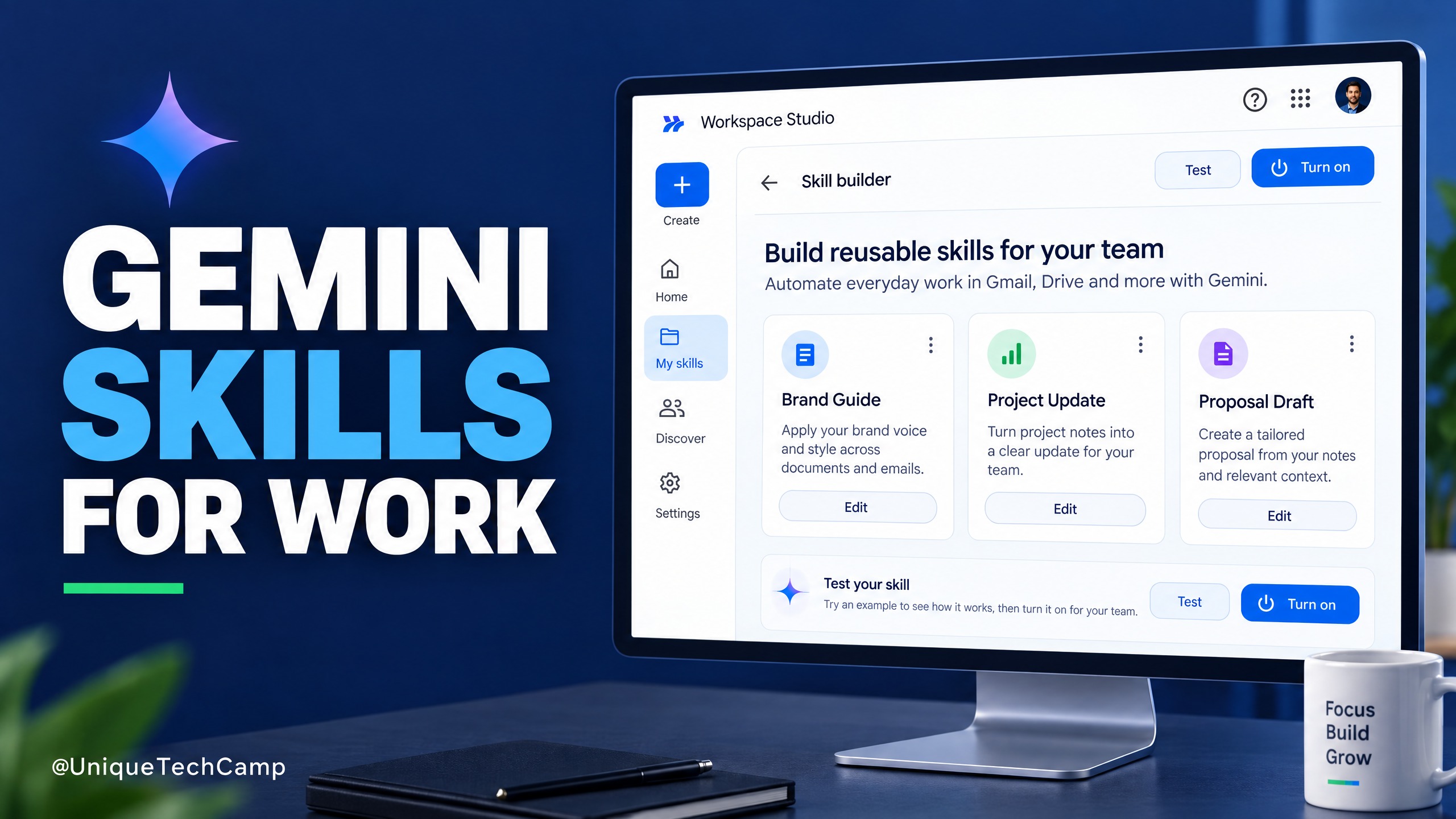
Google Workspace Skills: A Practical Guide for SMEs
Google Workspace Skills let teams reuse custom instructions across supported Workspace apps. This practical guide explains the rollout, eligibility checks, a safe pilot workflow and what to measure before expanding.
Cloudflare Clef: A Practical AI Triage Guide for SMEs
Cloudflare Clef turns support messages into bounded decisions rather than free-form answers. Here is a practical way for SMEs to test it, measure value and keep a human in control.
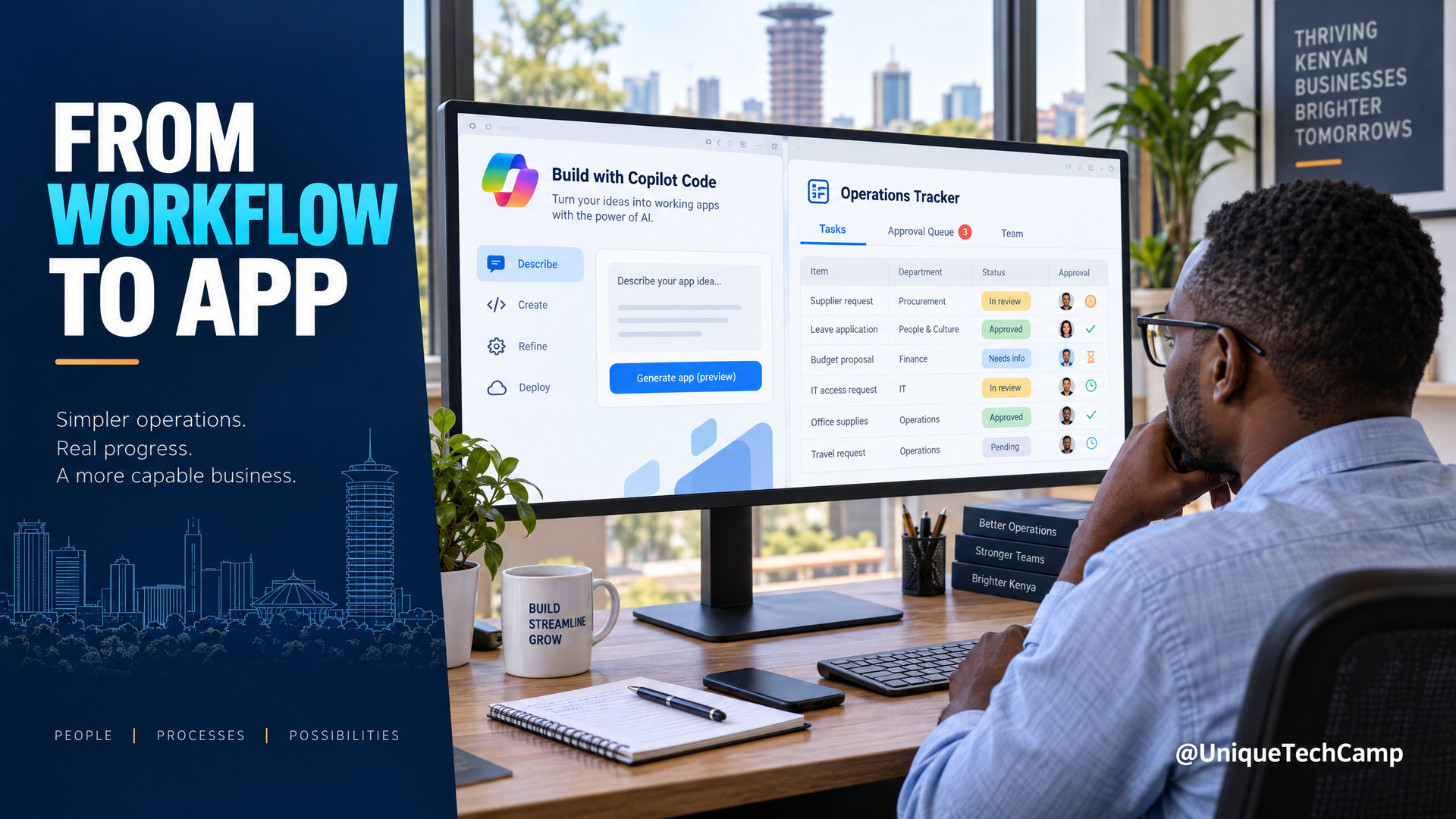
Microsoft Copilot Code for SMEs: A Practical Workflow-to-App Offer
Microsoft Copilot Code is still rolling out. Learn a practical workflow-to-app service for Kenyan SMEs, with verified pricing, usage limits and a safe pilot plan.
UniqueTechCamp Desk
Online • Reply < 5 mins