
WhatsApp Sales Automation in Africa: From Casual Chats to High-Ticket Closings
In emerging markets, commerce moves on WhatsApp. Learn how integrating official WhatsApp API automation with your web storefront yields a 98% message open rate and eliminates sales delays.
UniqueTechCamp Strategy Team
Revenue Operations Unit • UniqueTechCamp Engineering Unit
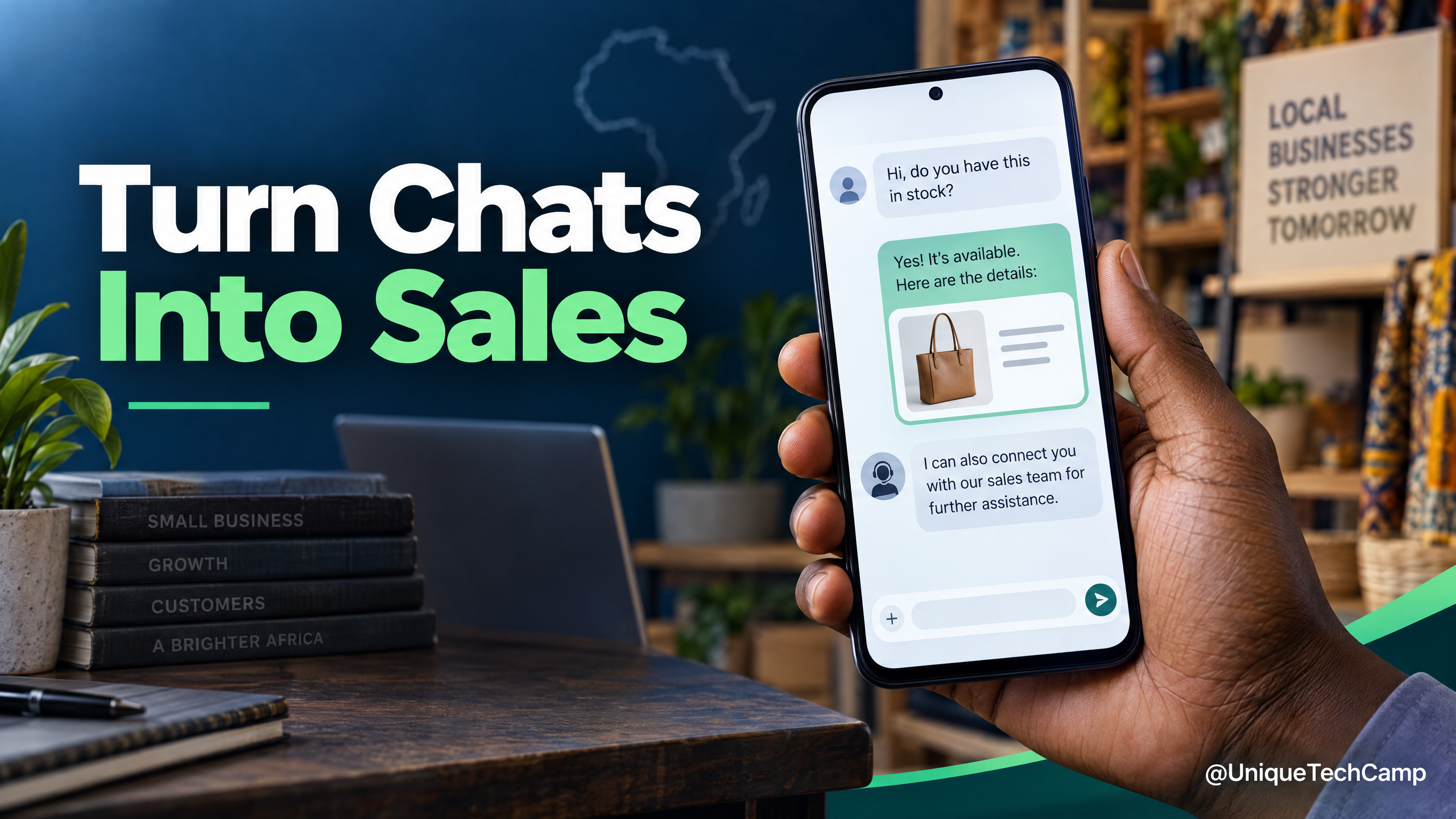
While email open rates struggle to top 18%, WhatsApp messages boast an astonishing 98% open rate—with over 80% of messages opened within five minutes of delivery.
Why Traditional Form Fills Fail
Standard website checkout and contact forms create excessive friction on mobile screens. Consumers in Kenya and across Africa prefer discussing specifications, delivery dates, and custom pricing via WhatsApp. However, relying on manual human replies means leads go cold after hours, over weekends, and during busy afternoon rushes.
The Automated WhatsApp Solution
By connecting your website directly to an enterprise WhatsApp automation workflow:
UniqueTechCamp can help a business map its WhatsApp enquiry, qualification and follow-up steps before automation is configured.
- A visitor clicks "Inquire on WhatsApp" on any product or service page.
- The message is pre-populated with the exact service SKU or package name.
- Our AI bot answers common questions, presents downloadable brochures, and collects customer requirements.
- Hot deals trigger an instant notification to your sales manager's phone with complete lead qualification notes.
The result? You capture leads before they look elsewhere, and your team spends their time closing deals rather than answering repetitive pricing queries.
Build the conversation on permission
Automation should begin with a useful invitation, not a scraped number or an unexpected broadcast. Meta’s WhatsApp Business Messaging Policy says that a business may contact a person only when the person has provided a mobile number or username and has given opt-in permission to receive subsequent messages or calls from that business. That requirement matters whether the first contact comes from a website, an advert, a shop counter, a QR code, SMS or a sales representative.
A practical opt-in record should say who the business is, what the person will receive and how to stop it. Meta’s official opt-in guidance requires the business name and a clear statement that the person is subscribing to communication. It also recommends setting expectations for different categories, such as order updates, relevant offers and product recommendations. A checkbox labelled simply “contact me” is weaker than a plain explanation such as “Send me updates about this quotation and occasional offers from [business name] on WhatsApp”, followed by an easy opt-out route.
Keep the record alongside the lead rather than treating consent as a one-off technical event. Store the source, date, wording shown, category selected and any withdrawal request. If a person asks for marketing to stop, stop it promptly and retain only the minimum suppression record needed to prevent another campaign from restarting the conversation. Do not assume that a customer who asked for a quotation also agreed to every future promotion.
Respect the WhatsApp conversation window
The official WhatsApp Business Platform is not a licence to send unlimited follow-ups. When a user messages or calls a business, a 24-hour customer service window opens and resets when the user contacts the business again. Meta’s service-message documentation explains that free-form service messages can be sent during this window; after it closes, the business can send only pre-approved template messages. The policy also says that a business may initiate a conversation only with an approved Message Template.
This distinction should be built into the workflow. A lead-status field can record the last inbound message and calculate whether the service window is open. While it is open, an assistant can answer a product question, clarify delivery requirements, share a brochure or prepare a quotation. When it closes, the next task should be a permitted template, a scheduled human follow-up through an appropriate channel, or no message at all—not an improvised copy-and-paste sequence.
Templates should have a narrow, honest purpose. A quotation reminder should identify the quotation and invite a reply; an order update should describe the order stage; a marketing message should be sent only to a contact whose permission covers that category. Approval does not make irrelevant messaging helpful. Monitor replies, blocks, reports and opt-outs, because Meta can limit sending where quality is poor or where people experience communications as spam, deception or surprise.
Design automation around buying decisions
A high-ticket enquiry needs more than a greeting and a link. The first automated reply should confirm the business identity, acknowledge the request and offer a small number of useful next steps. Asking one clear question at a time is easier on a mobile screen than presenting a long form inside a chat. A property adviser might ask the preferred area, intended use and decision timeframe; a professional-services firm might ask the problem to solve, the organisation size and the desired start date. These are conversation fields, not assumptions about a customer’s budget or seriousness.
Use structured choices where they reduce typing, but leave room for the person to explain. Buttons or numbered options can route a request to sales, support, delivery or a human adviser. Free text remains important when a buyer has a detailed specification, a local-language question or a constraint that the original menu did not anticipate. The system should preserve the original wording, rather than replacing it with a score that hides context.
Qualification should make the next human action clearer. A useful internal summary can contain the enquiry source, product or service requested, stated requirements, location, timing, consent category, unanswered questions and the next agreed step. It should not invent a “hot” label merely because a person clicked a button. A lead becomes actionable when the evidence in the conversation supports an action such as sending a tailored proposal, arranging a site visit or checking stock.
Do not let the bot negotiate matters it cannot verify. Prices, availability, delivery dates, financing, warranties and regulatory conditions should come from controlled business data or a named person. If a value is missing or stale, the assistant should say that a team member will confirm it. This is slower than a confident guess, but it protects the buyer and the business from an automated promise that cannot be honoured.
Make the hand-off visible
Automation works best when the customer can tell what happens next. At the point where a request needs judgement, offer a direct route to a trained person. The WhatsApp policy permits automation during the customer service window but requires prompt, clear and direct escalation paths, such as an in-chat human transfer, phone number, email, support form or in-person visit. Put the route in the conversation instead of hiding it in a footer.
Set a simple ownership rule: every qualified enquiry has one responsible person, one next action and one due time. If a sales manager receives a notification, the notification should include a link to the conversation and the agreed action, not just a phone number and the word “hot”. If the customer is promised a call, record the time zone and preferred channel. If the team cannot respond within the promised period, send a truthful status update rather than an automated claim that someone is “on the way”.
Human review should cover sensitive, unusual or high-consequence cases. That includes complaints, refunds, vulnerable customers, requests involving identity documents, health information, financial details or a dispute about what was promised. A bot may gather a safe summary, but it should not request full payment-card numbers, bank-account numbers, personal identity numbers or other sensitive identifiers in a chat. Meta’s policy expressly warns businesses not to ask people to share those details.
Protect lead data from first contact to deletion
A WhatsApp sales workflow is also a personal-data workflow. The Kenyan Office of the Data Protection Commissioner states that personal data should be processed lawfully, fairly and transparently, collected for explicit and legitimate purposes, limited to what is necessary, kept accurate and retained no longer than necessary. Its data-subject rights guidance says that people have rights to be informed, access their data, object to processing, correct misleading data and request deletion of false or misleading data.
Translate those principles into small operational decisions. Tell a person why a phone number, location or requirement is needed. Avoid collecting a full address when a town is enough to prepare an initial quotation. Separate information needed to fulfil an order from optional information used for marketing. Give staff role-based access, protect exports and set a review date for dormant leads. If a third-party CRM, chatbot or analytics service receives the conversation, document that relationship and check the applicable transfer, security and retention obligations before enabling the integration.
Draft a short privacy notice that is specific to the journey. It should identify the business, explain the purposes, describe relevant sharing, state how to exercise rights and provide a contact route. A privacy notice cannot repair an unclear consent request or justify collecting everything “just in case”. It should match what the automation actually does, including any human review, lead scoring, recordings or hand-off to another service.
Measure progress without inventing success
Opening a chat is not the same as creating revenue. A responsible dashboard separates delivery, conversation and commercial outcomes. Useful measures include opt-in rate by source, percentage of conversations receiving a reply, time to first human response, unanswered-question rate, qualified-enquiry rate, quotation rate, booked-meeting rate, completed-sale rate, opt-out rate and block or report rate. Define each measure before comparing it: for example, decide whether a “qualified enquiry” requires a verified requirement, a location, a timeframe or a human review.
Keep the denominator visible and report a time period. A small campaign can produce an impressive percentage from very few conversations, while a larger campaign may expose service bottlenecks that a headline rate hides. Compare like with like, annotate changes to adverts, templates, prices and staffing, and distinguish results observed by the business from outcomes promised by a vendor. There is no universal conversion rate for African markets, industries or high-ticket products, so the baseline must come from the business’s own consented records.
Review quality alongside speed. A shorter first response is not an improvement if it produces more corrections, complaints or opt-outs. Read a sample of conversations for clarity, accuracy, cultural fit and whether the customer received a genuine next step. Test local spelling, currency presentation, time zones and language preferences with people who understand the market; do not infer a person’s language or purchasing power from a mobile number.
A safer path from pilot to scale
Start with one journey that has a clear owner, a stable answer set and a low risk of misunderstanding. Map the entry point, consent wording, first reply, qualification questions, business-data lookup, escalation trigger, template fallback and deletion or suppression path. Test the flow with staff accounts and a small consenting group before connecting every product page. Keep a versioned copy of prompts, templates, approved answers and privacy wording so a change can be reviewed and reversed.
Run failure tests as deliberately as success tests. What happens when someone sends a voice note, an image, a blank message or a language the bot does not support? What if stock data is unavailable, the customer changes their mind, the service window has closed, a human is offline or the customer asks not to be contacted again? Each case needs a safe response, an owner and a record of what the customer was told.
Finally, make the experience feel like a conversation rather than a trap. Identify the business, explain why a question is being asked, keep messages concise, offer a human route and honour the customer’s answer. Automation can remove repetitive work and make follow-up more consistent, but trust is what allows a high-value conversation to continue. The strongest system therefore treats WhatsApp as a permissioned service channel connected to accurate business operations—not as a shortcut around consent, judgement or accountability.
Local operating realities deserve the same care as the technical build. A buyer may share a device, move between mobile networks, prefer a voice note or need an answer outside the team’s normal office hours. Offer an accessible alternative when the chat flow fails, and avoid making a sale depend on a single format, language or payment assumption. If a customer needs a quotation in a particular currency or wants to speak with a colleague who understands a local language, record that preference and route it to a person who can act on it. Accessibility is not a promise that every request can be fulfilled instantly; it is a commitment to explain the available route and avoid unnecessary friction. Keep operational fallbacks documented: a phone number that is monitored, an email inbox with an owner, a form that does not discard the conversation, and a process for reconciling a manual sale with the CRM. These details protect continuity when an API, handset, dashboard or staff rota is unavailable. They also make the automation easier to audit, because the business can show what happened when the ideal path was not available.
Need this built for your business?
UniqueTechCamp AI Solutions Desk can help connect your website, WhatsApp enquiries and sales follow-up into a practical workflow. Book an appointment to discuss your requirements.
Deploy An Autonomous AI Lead Gen System Today
We engineer high-converting web applications with integrated 24/7 WhatsApp qualification bots and multi-channel follow-up drips.
Related Strategy Articles
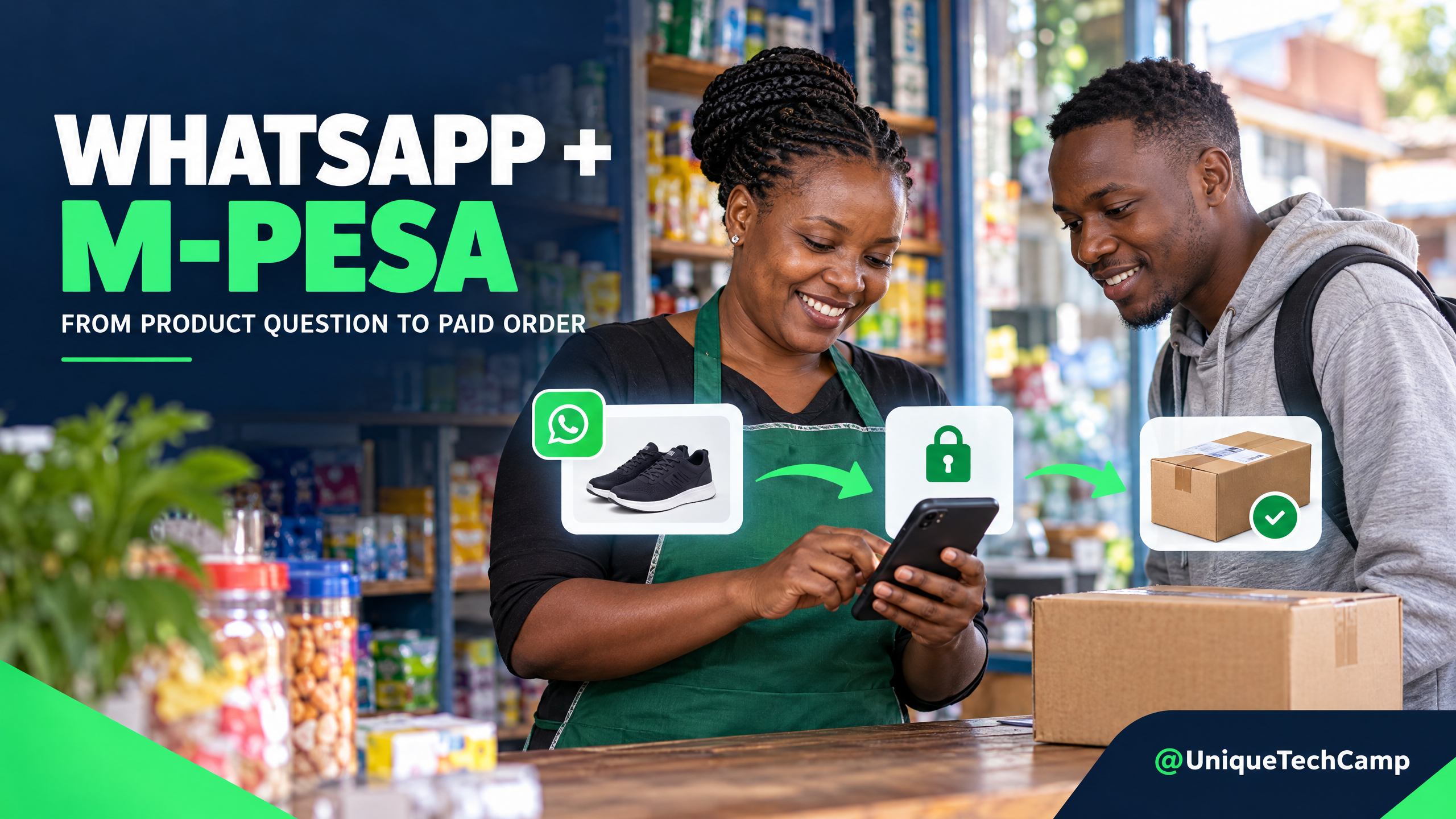
From Product Inquiry to Paid Order: A WhatsApp + M-Pesa Journey for Kenyan Retailers
WhatsApp M-Pesa order flow for Kenyan retailers: check stock, confirm the order, verify payment and fulfil delivery with clear hand-offs.
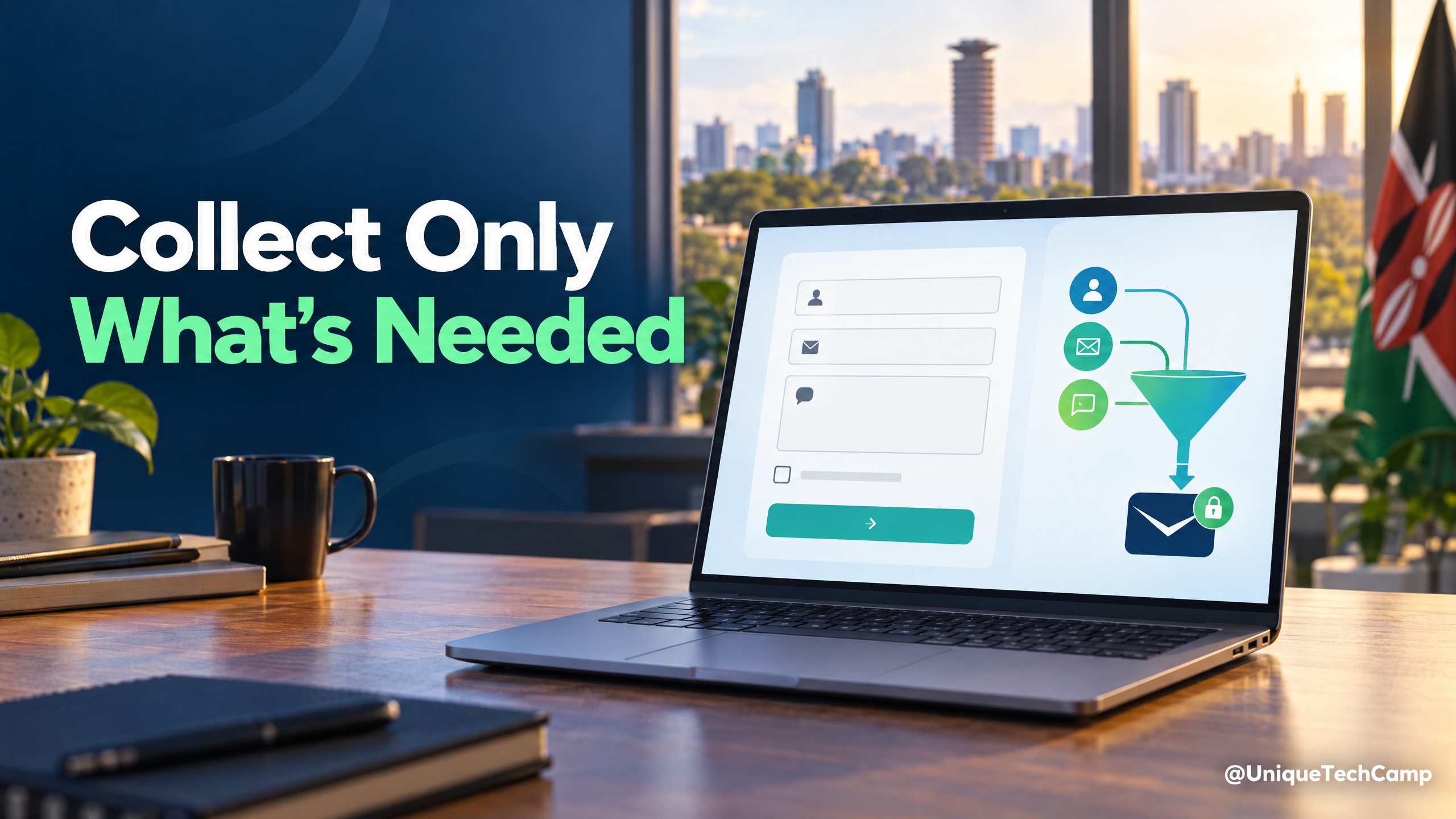
Before You Add Another Lead Form: A Kenyan Business’s Website Privacy Checklist
A practical checklist for collecting enquiries on a Kenyan business website: ask only for what you need, explain why, separate replies from marketing and plan how information is stored and removed.
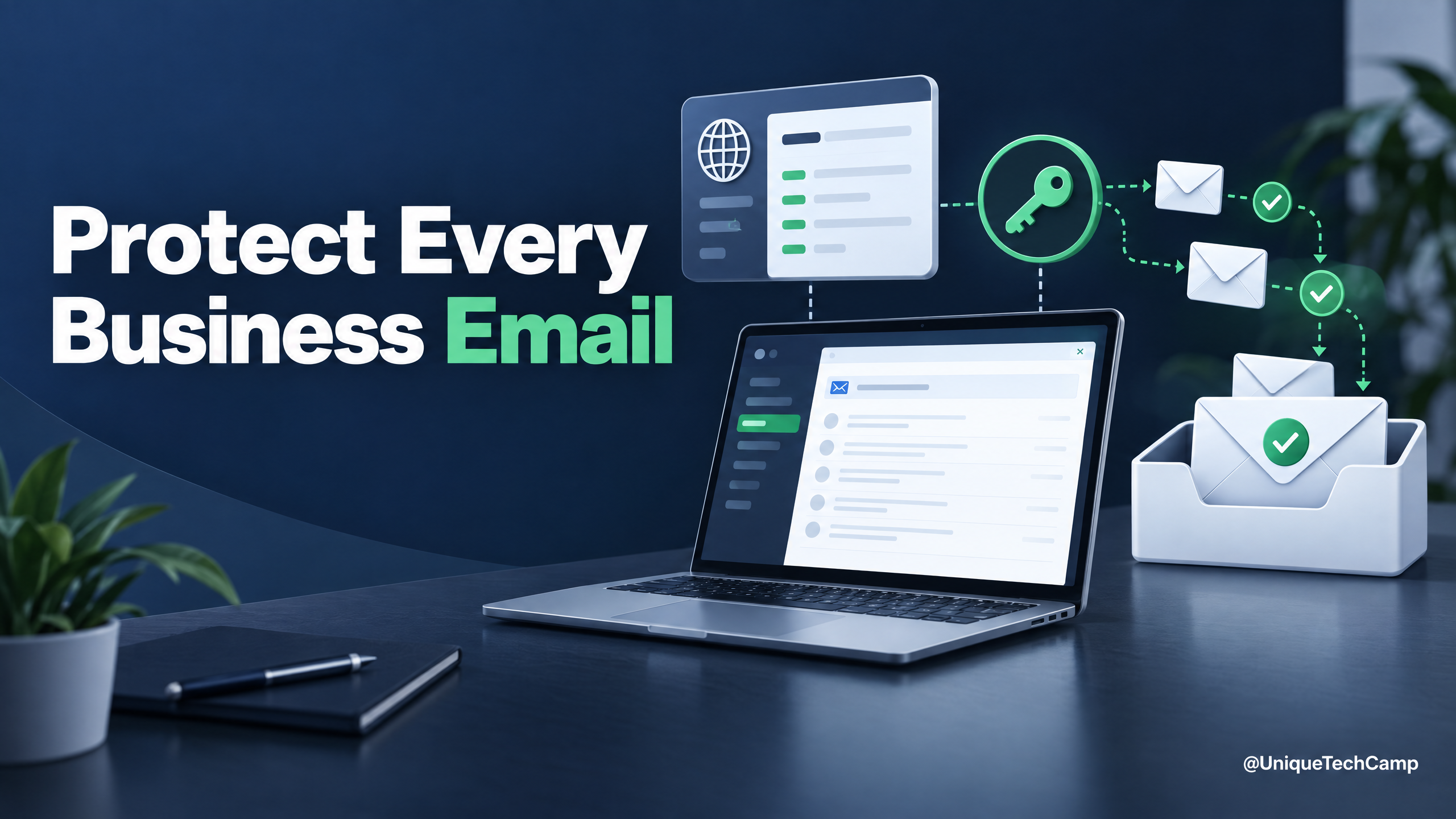
Your Business Email Isn’t Getting Through? Start With SPF, DKIM and DMARC
A practical domain-email checklist for Kenyan and global businesses: inventory every sender, configure authentication, make opt-outs work and monitor the right delivery signals.
UniqueTechCamp Desk
Online • Reply < 5 mins