
How Healthcare & Dental Clinics Double Patient Consultations with Instant AI Intake
Medical and aesthetic practices lose dozens of high-value procedures every month to slow receptionist responses. See how 24/7 AI intake bots streamline triage and appointment bookings.
Lawrence Otieno
Lead Architect • UniqueTechCamp Engineering Unit

Patients seeking specialized healthcare, dental procedures, or aesthetic consultations rarely call during office hours. Most conduct their private research late in the evening or early in the morning.
The Front-Desk Bottleneck
A typical clinic relies on front-desk receptionists who are overwhelmed with in-person patients, billing, and patient check-ins. Phone calls go unanswered, WhatsApp messages sit unread for hours, and prospective patients move to the next clinic on Google Maps.
Intelligent 24/7 Patient Intake
By deploying an automated AI healthcare intake assistant:
UniqueTechCamp can help clinics map an AI intake workflow to their triage and appointment-booking process.
- The patient receives immediate answers to treatment options, insurance acceptance, and operating hours.
- The bot performs preliminary triage, collecting key health goals and procedure interests.
- Available calendar slots are offered directly in chat, locking in patient consultations with automated SMS reminders.
This automated intake operates seamlessly 24/7/365, turning your clinic's web presence into a patient acquisition machine.
Make the First Conversation Safe, Useful and Human
Instant intake is most valuable when it removes avoidable waiting without pretending to be a clinician. A clinic can use an assistant to gather the information a person has chosen to share, explain the next administrative step and offer a route to a member of staff. It should not diagnose, prescribe, promise an outcome or decide that a person does not need care. The distinction matters: an intake conversation organises access to care; it does not replace assessment by a qualified professional.
Start by defining the assistant's job in plain language. A suitable opening can say that the service is automated, that it collects information for the clinic and that urgent symptoms require the appropriate emergency or out-of-hours service. Give people a visible way to stop the conversation, ask for a human and continue by telephone or another approved channel. These choices help a patient understand what is happening before they share sensitive information.
Design the Intake Around Decisions the Team Actually Makes
Long forms are not automatically better forms. The clinic should first list the decisions the reception or care team must make after a new enquiry. Examples might include which service was requested, whether the person is new or returning, the preferred contact method, availability, language or accessibility requirements, and whether a clinician or trained staff member must review the message before any appointment is offered. Ask only for information that serves one of those decisions.
A practical conversation can be staged rather than presented as a single questionnaire:
- Explain: identify the clinic, the automated nature of the assistant, the purpose of collection and the route for human help.
- Clarify: ask what the person wants to arrange, what service or area they are enquiring about and whether they are seeking general information or an appointment.
- Check: use carefully worded safety questions approved by the clinic. If a response may indicate urgency, stop routine qualification and give the locally appropriate escalation instruction.
- Route: send the minimum useful summary to the right queue, with a clear status showing whether staff review is required.
- Confirm: repeat the requested appointment details, explain what happens next and make it easy to correct an error.
This structure reduces the temptation to collect a complete medical history in a marketing chat. Clinical staff should own the wording of any health-related question, define escalation rules and approve the information that is safe to display about treatments, prices, insurance or preparation. The assistant can make those approved answers easier to find; it should not invent an answer when the approved information is missing.
Keep Triage Separate from Diagnosis
The word “triage” can mean different things. In a booking workflow it may simply mean sorting an enquiry into an administrative queue. In a clinical setting it can involve prioritising care based on symptoms and risk. A clinic should name which meaning applies and document the boundary. An assistant that collects a person's stated concern for a human review is materially different from one that interprets symptoms or recommends treatment.
For routine enquiries, use a conservative hand-off rule. When an answer is unclear, contradictory or outside the assistant's approved scope, the conversation should be routed to staff rather than pushed towards a booking. Staff need a queue that shows the original answers, the time received, the requested channel and any unanswered questions. They also need a way to amend or annotate the record without silently changing what the patient said.
Do not use a reassuring tone to conceal uncertainty. A safe response can explain that the assistant cannot assess the situation and provide the clinic's approved contact or emergency direction. The exact emergency wording should be adapted to the country and service setting, reviewed by the responsible clinical or governance lead and kept current. The assistant should never imply that a delayed reply is safe.
Protect Health Information from the First Question
Health information is sensitive. Before launch, the clinic should map where each answer goes: the chat interface, the model or automation provider, the booking system, the staff inbox, analytics tools, message provider and backups. Record who can access each location, how long information is retained, whether it is used to improve a provider's service and where processing takes place. A vendor's marketing description is not a substitute for a written review of the actual data flow and contract.
The ICO guidance on AI and data protection explains that organisations must apply data-protection principles to AI, including accountability, transparency, lawfulness, accuracy, fairness, security and data minimisation. In practice, that means documenting the purpose and lawful basis before collecting information, telling people what will happen to it, limiting fields to what is necessary and applying suitable access controls. Where the proposed processing is likely to create a high risk to people's rights and freedoms, the clinic should assess whether a data-protection impact assessment is required and complete it before deployment.
Design the form so that a person can choose not to disclose unnecessary detail. Do not ask for a full diagnosis, photographs, medication list or identity document merely because a model can accept it. If a photograph is genuinely needed for a later clinical process, explain that separate purpose and use the clinic's approved secure route rather than a casual chat upload. Avoid copying sensitive conversation transcripts into advertising audiences, general-purpose analytics or staff channels that do not need them.
Access should follow roles. Reception staff may need appointment information and the person's contact details; a clinician may need the approved clinical context; an external marketing user may need neither. Use individual accounts, strong authentication, audit logs and a tested process for removing access when someone's role changes. Confirm how a patient can ask to access, correct or delete information, subject to the applicable legal requirements and any records that the clinic must retain.
Be Transparent at the Point of Contact
A small notice beside the chat is more useful than a buried policy link. It should identify the clinic and the technology provider where relevant, state the purpose of the conversation, explain whether a human reviews the submission, identify the main categories of information requested and link to the clinic's privacy information. Tell the person how to reach the clinic without the assistant and how to raise a data-protection question.
People should not have to infer whether they are speaking to a person. Use a label such as “Automated clinic assistant” and repeat the disclosure if the conversation changes from general service information to personal information. If a system creates a summary for staff, preserve the underlying answers and mark the summary as machine-generated. Staff should check it before relying on it, because fluent wording is not evidence that the summary is accurate.
The World Health Organization guidance on ethics and governance of AI for health places ethics and human rights at the centre of design, deployment and use, and sets out principles intended to keep people accountable for health-related AI. For an intake assistant, that supports clear responsibility: name the clinic owner of the workflow, name the staff role that reviews escalations and make a decision to pause the assistant possible when safety, privacy or accuracy concerns arise.
Make Booking Rules Explicit
Calendar access should be narrower than the clinic's entire diary. Define which appointment types can be requested through the assistant, which require staff confirmation, what information must be checked before a slot is offered and what happens when the selected slot becomes unavailable. A provisional request may be safer than an automatic booking when eligibility, consent, preparation or clinical review is still outstanding.
Use approved, versioned content for opening hours, locations, accessibility information, fees, insurance statements and cancellation terms. If a price varies by assessment or treatment plan, say so plainly rather than presenting a starting figure as a quote. If the clinic does not accept a particular insurer or payment method, make the limitation visible before the person invests time in the conversation. Every confirmation should include the date, time, location or remote format, preparation instructions that have been approved, the cancellation route and a contact option for corrections.
Keep reminders proportionate and consent-aware. A message should reveal no more health information than necessary on a shared device or lock screen. Provide a way to change communication preferences and avoid sending repeated follow-ups when a person has asked not to be contacted. The booking system, not an improvised model memory, should be the authoritative source for appointment status.
Test with Realistic Edge Cases Before Launch
Demonstrations usually test the happy path. A clinic should test misspellings, incomplete answers, a language the workflow does not support, accessibility needs, a request for a human, conflicting calendar information, an out-of-scope treatment, a person who changes their mind and a person who asks the assistant to keep a secret from the clinical team. Test urgent wording using scenarios approved by the clinic's governance lead, without treating the test as clinical validation.
Review whether the assistant treats equivalent requests consistently and whether any group is more likely to be abandoned, misunderstood or routed to a slower queue. Include people who use screen readers, keyboard navigation, translation support or mobile devices. Provide a non-chat alternative for anyone who cannot or does not want to use the automated route. Accessibility is part of patient access, not a later design polish.
Record test cases, expected outcomes, actual responses and the decision to approve or block release. Give the system a version number and retain the approved prompts, rules and content. When a model, provider, booking integration or policy changes, run the relevant tests again. The NIST AI Risk Management Framework offers a voluntary structure for governing, mapping, measuring and managing AI risks; its lifecycle approach is a useful way to turn a one-off launch check into an ongoing control process.
Measure Service Quality, Not Just Leads
A larger number of conversations is not proof of better care or better access. Monitor whether people receive an understandable answer, whether requests reach the right queue, whether staff can correct errors, whether appointments are confirmed accurately and whether people can obtain human help. Review complaints, opt-outs, duplicate records, failed reminders, unanswered escalations and messages sent to the wrong destination.
Separate operational measures from clinical outcomes. A clinic may measure response and booking workflow performance internally, but it should not claim that an assistant improves diagnosis, treatment results or patient safety without suitable evidence. Do not publish a conversion rate, time saving or consultation multiplier unless the measurement method, period, population and comparison are defined and the claim has been substantiated. The existing article's promise should therefore be treated as a title and use case, not as evidence that every clinic will achieve the same result.
Set a review cadence with named owners. Reception can review routing and booking errors; the clinical lead can review safety boundaries; the privacy or governance lead can review data handling; and the supplier can provide incident and change information. If a serious error occurs, pause the affected route, preserve the relevant logs, contact the appropriate responsible people and communicate with the patient through the clinic's established process. A dependable intake system is one that can be inspected, corrected and switched off responsibly.
A Practical Rollout Sequence
Begin with a narrow, low-risk service such as answering approved administrative questions and collecting a request for a human callback. Document the purpose, data fields, suppliers, retention, access and escalation route. Run staff testing, accessibility checks and privacy review. Pilot with clear notice and an alternative channel, then examine errors rather than only successful bookings. Expand only when the team can explain what the assistant does, what it cannot do and who owns each exception.
This approach preserves the useful promise of instant contact while keeping clinical judgement with people. Automation can make it easier for a prospective patient to take the next administrative step, but trust depends on honest boundaries, careful handling of health information and a responsive human team behind the workflow.
Need this built for your business?
UniqueTechCamp AI Solutions Desk can help your clinic scope an AI intake and booking workflow. Book an appointment to discuss your requirements.
Deploy An Autonomous AI Lead Gen System Today
We engineer high-converting web applications with integrated 24/7 WhatsApp qualification bots and multi-channel follow-up drips.
Related Strategy Articles
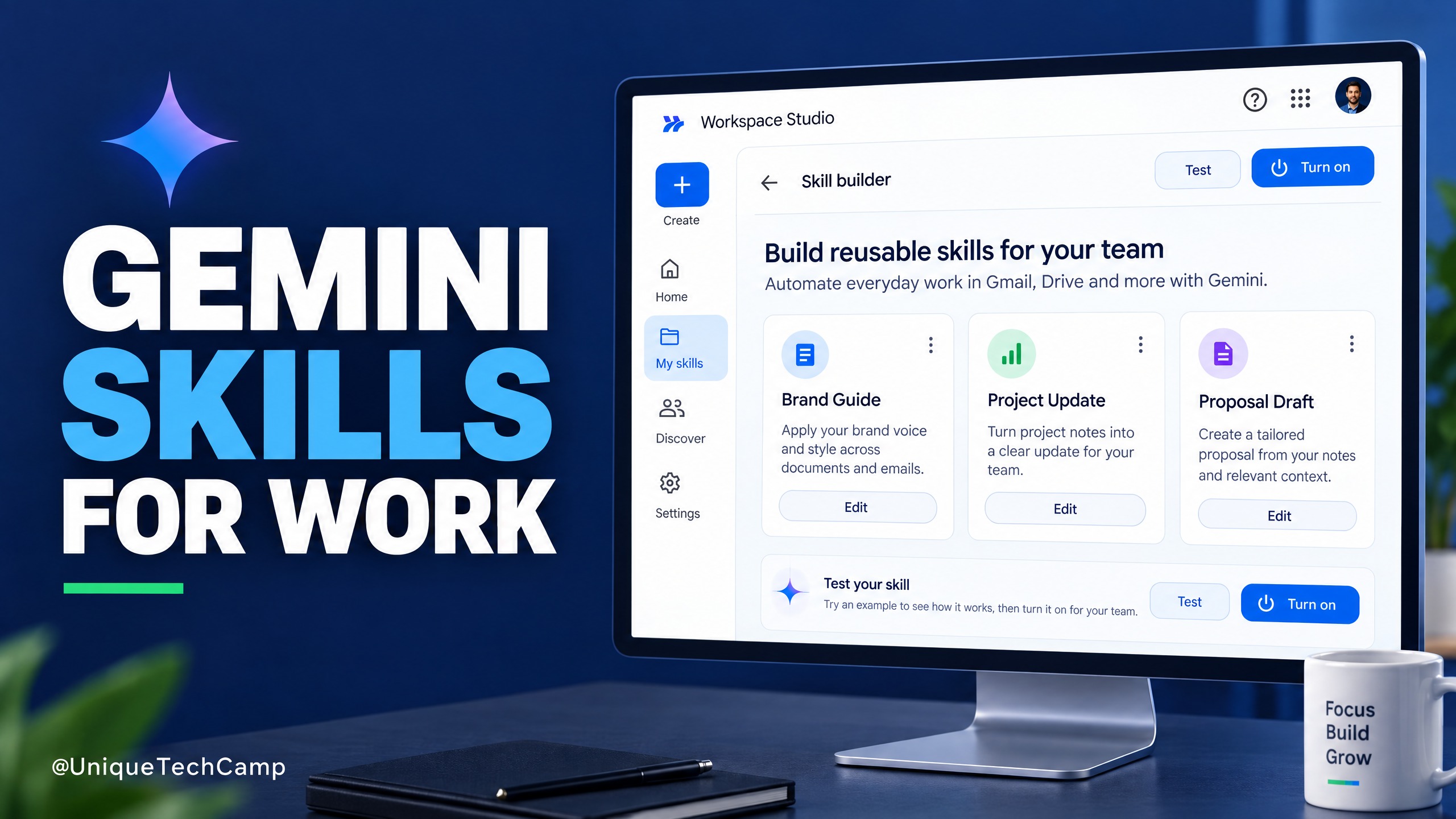
Google Workspace Skills: A Practical Guide for SMEs
Google Workspace Skills let teams reuse custom instructions across supported Workspace apps. This practical guide explains the rollout, eligibility checks, a safe pilot workflow and what to measure before expanding.

Cloudflare Clef: A Practical AI Triage Guide for SMEs
Cloudflare Clef turns support messages into bounded decisions rather than free-form answers. Here is a practical way for SMEs to test it, measure value and keep a human in control.
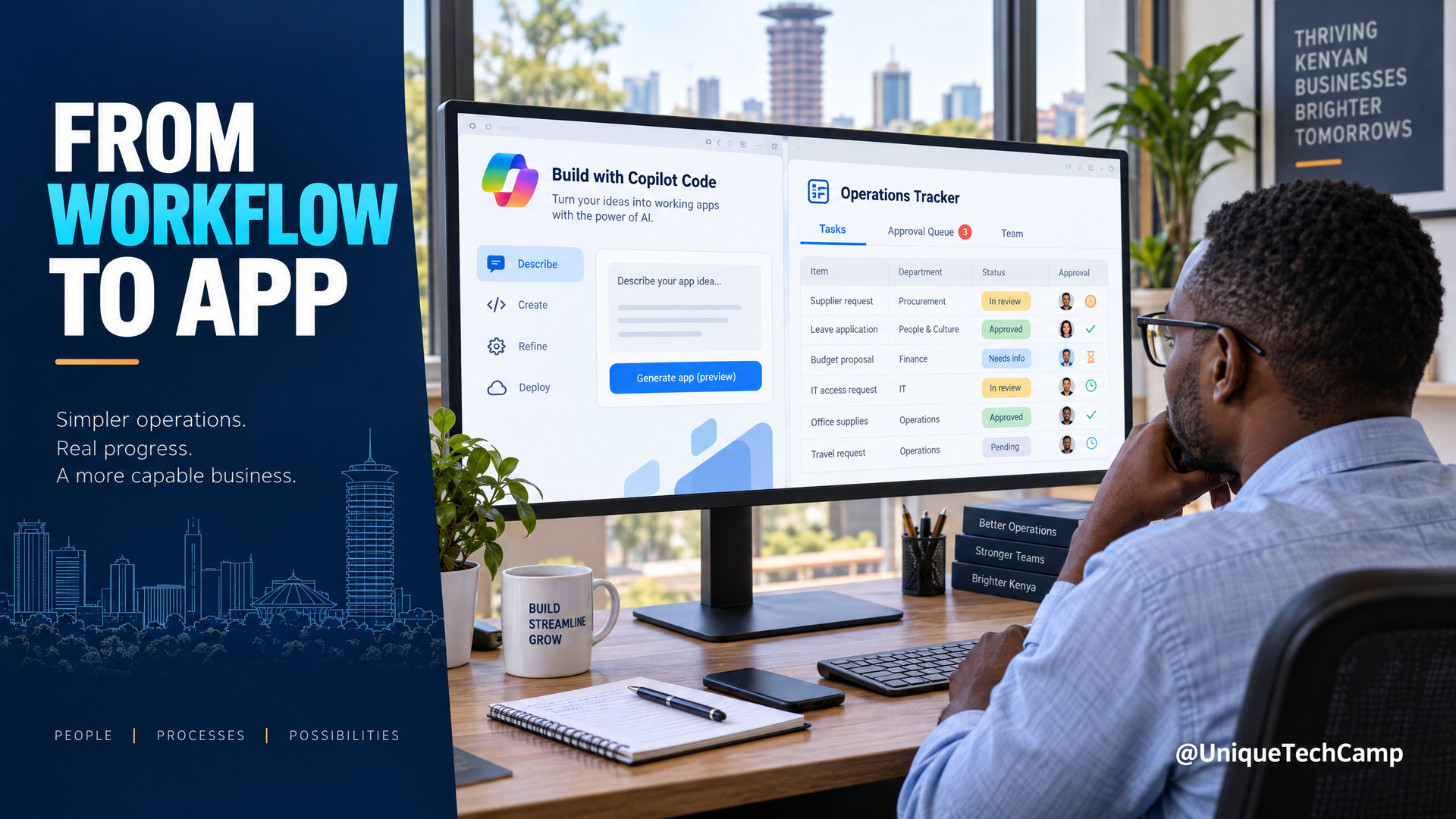
Microsoft Copilot Code for SMEs: A Practical Workflow-to-App Offer
Microsoft Copilot Code is still rolling out. Learn a practical workflow-to-app service for Kenyan SMEs, with verified pricing, usage limits and a safe pilot plan.

UniqueTechCamp Desk
Online • Reply < 5 mins