
Claude Sonnet 5.5 for Tender Responses: A Human-Checked Workflow for Kenyan SMEs
Learn how Kenyan SMEs can use Claude Sonnet 5.5 to build a traceable tender-compliance matrix and first-draft response, with human review, realistic API costs and clear limits.
UniqueTechCamp Editorial Desk
Business Technology Editor • UniqueTechCamp Engineering Unit

Tender packs can consume days of a small team’s time: extract requirements, find matching evidence, check eligibility and draft a response without making claims the business cannot prove. Claude Sonnet 5.5 may help with that document-heavy work, but the useful product is not “AI writes a winning bid”. It is a reviewable evidence and compliance pack that makes gaps visible before a person signs anything.
Anthropic announced Sonnet 5.5 on 28 September 2026, positioning it for well-scoped everyday tasks, bug fixing and polished office documents. Anthropic says it generates output more than 30% faster than Sonnet 5 and can cost up to 30% less per task in its tests; those are vendor claims, not a promise that every tender job will be quicker or cheaper. 1 The practical question for a Kenyan SME or consultant is whether the model can help produce a better-checked first draft while keeping a qualified human in control.
A service offer with a clear boundary
A small consultancy could test a one-off Tender Evidence and Compliance Pack for a supplier, construction firm, IT provider or professional-services business. The client provides one tender or request for proposal, its approved company profile, policies, licences and relevant project evidence. The deliverable is:
- a requirement-by-requirement matrix with tender page or section references;
- a list of evidence supplied, missing, expired or inconsistent;
- draft response sections based only on approved facts;
- a reviewer’s checklist for names, figures, dates, certifications and sign-off.
Keep the scope to one tender, one evidence set and an agreed revision round. Do not submit the bid for the client, invent experience, provide legal advice or suggest that AI can improve the probability of winning. The commercial value, if clients want the service, is the operator’s procurement literacy, evidence organisation and quality control—not the model alone.
A practical Claude Sonnet 5.5 tender workflow
1. Agree the scope and permission. Record which tender, which company records and which people may review the result. Identify confidential, personal or third-party information before uploading anything. Use an approved account and check the provider’s current contractual and data-handling terms.
2. Build a minimal source pack. Remove irrelevant personal information, credentials and unrelated customer data. Keep the tender’s original page numbers and file names. If a scan has poor OCR or a table is unreadable, flag it for manual transcription rather than allowing a model to guess.
3. Extract requirements before drafting. Ask Sonnet 5.5 to list each requirement with its section or page, whether it is mandatory or scored, and what evidence would satisfy it. Require short verbatim quotations or precise source references. A reviewer checks this register against the original tender before the drafting stage.
4. Mark evidence honestly. For every requirement, classify the client’s support as “evidenced”, “partly evidenced”, “not supplied” or “needs clarification”. Ask the model to quote the source of each claim. Missing evidence is a task for the client—not an invitation to create a plausible substitute.
5. Draft one response section at a time. Give the model the relevant requirement and approved evidence only. Set the word limit, requested format and tone. Instruct it to leave a visible placeholder where proof is missing and never to add an unverified certification, client, project, date or performance figure.
6. Run a challenge pass. Ask for unsupported assertions, contradictions between documents, arithmetic errors, expired dates, tender conditions that were not answered and statements that overstate the evidence. Then have a person check every cited page and every material claim. A second AI pass is not independent verification.
7. Return a usable handover. Deliver the requirement matrix, marked gaps, draft response and final reviewer checklist. The client’s authorised signatory approves the final submission. Delete or return working files according to the engagement terms.
What it may cost—and how to price the service
Anthropic’s published Sonnet 5.5 API rates are US$2 per million input tokens and US$10 per million output tokens; cache reads and writes have separate rates. 1 For a simple illustration, 250,000 input tokens plus 40,000 output tokens would be about US$0.90 at those list rates, before any cache use, retries, tools, taxes, hosting or human review. This is arithmetic from the published rates, not a prediction of how many tokens a real tender will use.
Claude’s chat subscription is different from API billing. Anthropic currently lists Pro at US$20 month-to-month (or US$200 billed annually) and Max from US$100 a month, with variable usage limits; a subscription is not unlimited API capacity. 2 Anthropic lists Kenya as a supported Claude location, but account, payment and feature availability should still be checked before a client engagement. 3
Quote the professional service from expected reading, evidence-checking, drafting and reviewer hours, plus any approved platform or conversion costs. Set a document-volume limit and revision allowance. Track token usage separately from staff time: a small API bill does not mean the work is free if a person must check every tender clause.
Measure the pilot, not the promise
For the first few jobs, record how long the team takes to build the matrix and draft before and after introducing the workflow. Also track the share of requirements with a traceable source, unsupported claims caught before sign-off, missing evidence found, correction rounds, model and tool costs, and client acceptance. If the reviewer spends as long correcting the output as drafting from scratch, change the process or stop offering that version.
Do not treat an attractive sample as proof of repeatable quality. Tender documents vary, OCR can lose table structure, requirements may depend on cross-references, and models can misread exceptions or confidently fill a gap. The cited performance and speed figures are Anthropic’s own; they are not independent evidence that a particular bid response is complete. TechCrunch’s independent report also describes the release as a faster everyday-work model, while attributing the specific speed claim to Anthropic. 4
Privacy, ethics and the human decision
Kenya’s Data Protection Act requires personal data to be processed lawfully, fairly and transparently, for specified purposes and only to the extent necessary; it also sets conditions for transfers outside Kenya. 5 The Office of the Data Protection Commissioner’s cross-border guidance discusses safeguards, cloud processing and transfer documentation. 6 A company should assess its role, lawful basis, notices, processor terms and transfer safeguards before sending personal data or confidential bid material to a hosted AI service. Seek qualified advice where the facts require it.
Keep tender facts attributable to the client’s own evidence. Protect trade secrets, check copyright and confidentiality restrictions, and disclose AI assistance where the client or procurement rules require it. Never let a model sign, certify, submit or make a legal eligibility decision. The authorised person—not the chatbot—owns the final representation.
Turn the matrix into a submission gate
The matrix becomes more useful when it is also the handover record. Give each row a stable identifier and keep the tender’s wording separate from the company’s answer. A practical row can contain the requirement, its location in the tender, whether it is mandatory or scored, the proposed response, the evidence file and page, the evidence owner, its validity or expiry date, and the reviewer’s decision. This makes a missing attachment visible without forcing a reader to search through a long draft.
For public procurement in Kenya, start with the document issued for that particular opportunity rather than assuming that every tender uses the same checklist. The Public Procurement Regulatory Authority publishes different standard documents for works, goods, proposals, services, information technology and other categories. Its official Standard Tender Documents page also explains that the documents and formats are issued for use by public entities and other stakeholders. Treat them as a useful orientation, not as permission to ignore the procuring entity’s own instructions, addenda or clarification notices.
Before drafting, create an “instructions to bidder” block at the top of the working file. Record the closing date and time exactly as stated, the submission channel, file-format rules, naming conventions, required signatures, tender-security instructions, validity period, clarification route and any page or word limits. Addenda should be separate dated inputs. If an addendum changes a requirement, mark the old row as superseded and link the new row to the notice. This simple version history helps a reviewer distinguish a genuine change from an accidental contradiction.
Use evidence labels that a person can defend
“Evidenced” should mean more than “the model found similar words”. It should mean that a named document supports the exact proposition, the document is attributable to the client, and the reviewer has checked the relevant page or record. “Partly evidenced” is appropriate where the organisation can support only some of a requirement. “Not supplied” means the pack contains no acceptable proof. “Needs clarification” should identify the person who must answer and the question that remains open.
Keep three versions of important statements in the working record: the client’s source wording, the model’s proposed wording and the reviewer-approved wording. Do not silently improve a claim by changing “supported” into “certified”, “experience” into “completed contracts”, or “available” into “owned”. Those distinctions can affect eligibility and evaluation. Where a number is required, show its source and unit. Where a date matters, show the date of the underlying certificate or project record rather than relying on a sentence in an older company profile.
A useful challenge pass asks questions that can be answered from the pack: Which sentence has no source? Which response uses a client name that appears nowhere in the evidence? Which certificate is expired at the stated closing date? Which total does not equal the line items? Which answer addresses a scored criterion but not the mandatory instruction beside it? The model can suggest a list of questions, but the reviewer must resolve them against the original files. If the answer is not in the evidence, leave a clearly visible placeholder or mark the requirement open.
For SMEs exploring tender-response assistance, UniqueTechCamp can help map source evidence, reviewer checks and approval steps before a pilot.
Protect the tender pack before it reaches a hosted service
Separate the information needed to draft from information that is merely convenient. A tender may contain names, identity details, signatures, phone numbers, bank information, tax records, staff CVs, customer references and commercially sensitive rates. Make a redacted working copy where those details are not needed. Keep the original in the client-controlled location, record who may access it, and avoid placing passwords or private keys in a prompt or attachment.
Kenya’s Data Protection Act sets principles including lawful, fair and transparent processing, explicit and legitimate purposes, data minimisation, accuracy and storage limitation. It also says that personal data should not be transferred outside Kenya unless there are adequate safeguards or the data subject has consented. The Data Protection Act on Kenya Law should therefore sit beside the engagement checklist, not be treated as a footnote after uploading. Decide whether the proposed use has a documented lawful basis and whether a processor agreement, notice or other control is needed.
For a hosted AI service, ask what happens to prompts, uploaded files, outputs, logs and deleted material under the account and contract being used. Record the provider, account type, relevant terms, access permissions, retention setting and deletion action. The Office of the Data Protection Commissioner’s Guidance Note on Cross-Border Data Transfers highlights safeguards, accountability tools, technical and organisational measures, record-keeping and restrictions on onward transfers. If the facts indicate high risk, pause the workflow and obtain qualified data-protection advice rather than treating a generic privacy setting as a complete assessment.
Make human approval visible
The final reviewer should not approve a document merely because it reads smoothly. Ask the reviewer to initial or otherwise record decisions for eligibility, evidence, arithmetic, confidentiality, formatting and submission readiness. A second person can check the final file name, attachments, signatures and transmission receipt where the engagement warrants it. Keep the approved version immutable after sign-off; if a late change is unavoidable, identify the changed rows and repeat the affected checks.
Do not confuse a model’s explanation with an audit trail. Preserve the source file name and page reference for each material claim, but do not preserve unnecessary personal data just to make the record look complete. The audit trail should answer who supplied the evidence, who checked it, what was changed, why it was changed and who authorised the final representation. A concise decision log is more useful than a large folder of unlabelled prompts and drafts.
Anthropic’s Sonnet 5.5 announcement describes the model’s speed, cost and evaluation results as its own testing and explains that benchmark scores capture only one facet of capability. That distinction matters here. Use the model for extraction, comparison and a bounded first draft, then test the actual workflow on the kinds of tender documents the SME handles. Keep a record of errors found and time spent, but do not turn a small internal trial into a claim about winning bids or universal accuracy.
A sensible next step
Start with a sample tender and a non-sensitive evidence pack. Build the matrix first, ask a procurement-literate reviewer to mark every error, and calculate the full human time as well as the API cost. If that test is useful, offer a tightly scoped, client-approved Tender Evidence and Compliance Pack. If it is not, keep the checklist and do not sell an automation claim the workflow cannot support.
For teams preparing a human-reviewed tender workflow, UniqueTechCamp can help scope the evidence pack, reviewer steps and approval controls before submission.
Sources
[1] Anthropic, “Claude Sonnet 5.5” — announcement, performance claims and API pricing
[2] Anthropic, Claude plans and pricing
[3] Anthropic Support, supported countries
[4] TechCrunch, independent Sonnet 5.5 coverage
Deploy An Autonomous AI Lead Gen System Today
We engineer high-converting web applications with integrated 24/7 WhatsApp qualification bots and multi-channel follow-up drips.
Related Strategy Articles
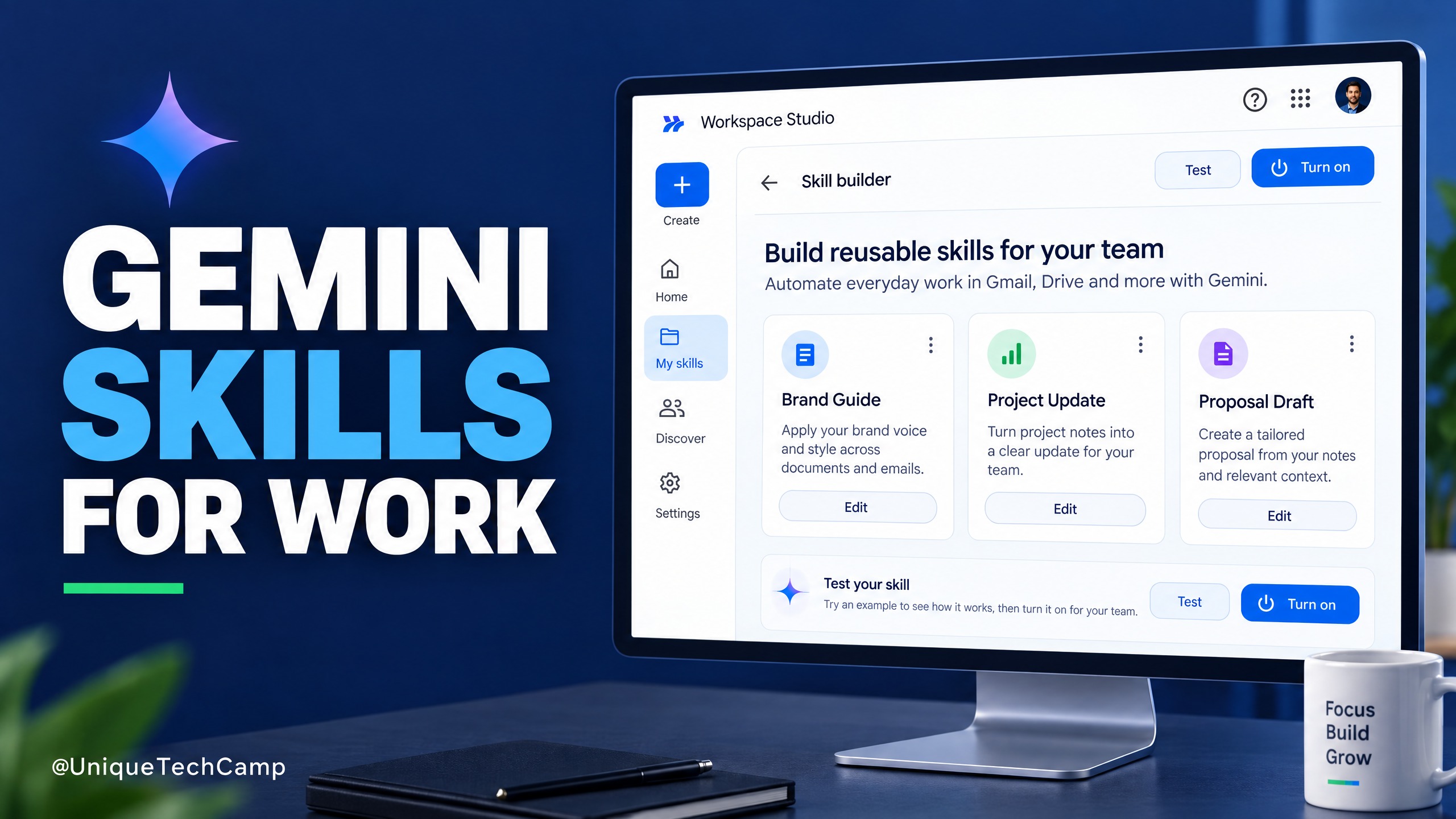
Google Workspace Skills: A Practical Guide for SMEs
Google Workspace Skills let teams reuse custom instructions across supported Workspace apps. This practical guide explains the rollout, eligibility checks, a safe pilot workflow and what to measure before expanding.

Cloudflare Clef: A Practical AI Triage Guide for SMEs
Cloudflare Clef turns support messages into bounded decisions rather than free-form answers. Here is a practical way for SMEs to test it, measure value and keep a human in control.
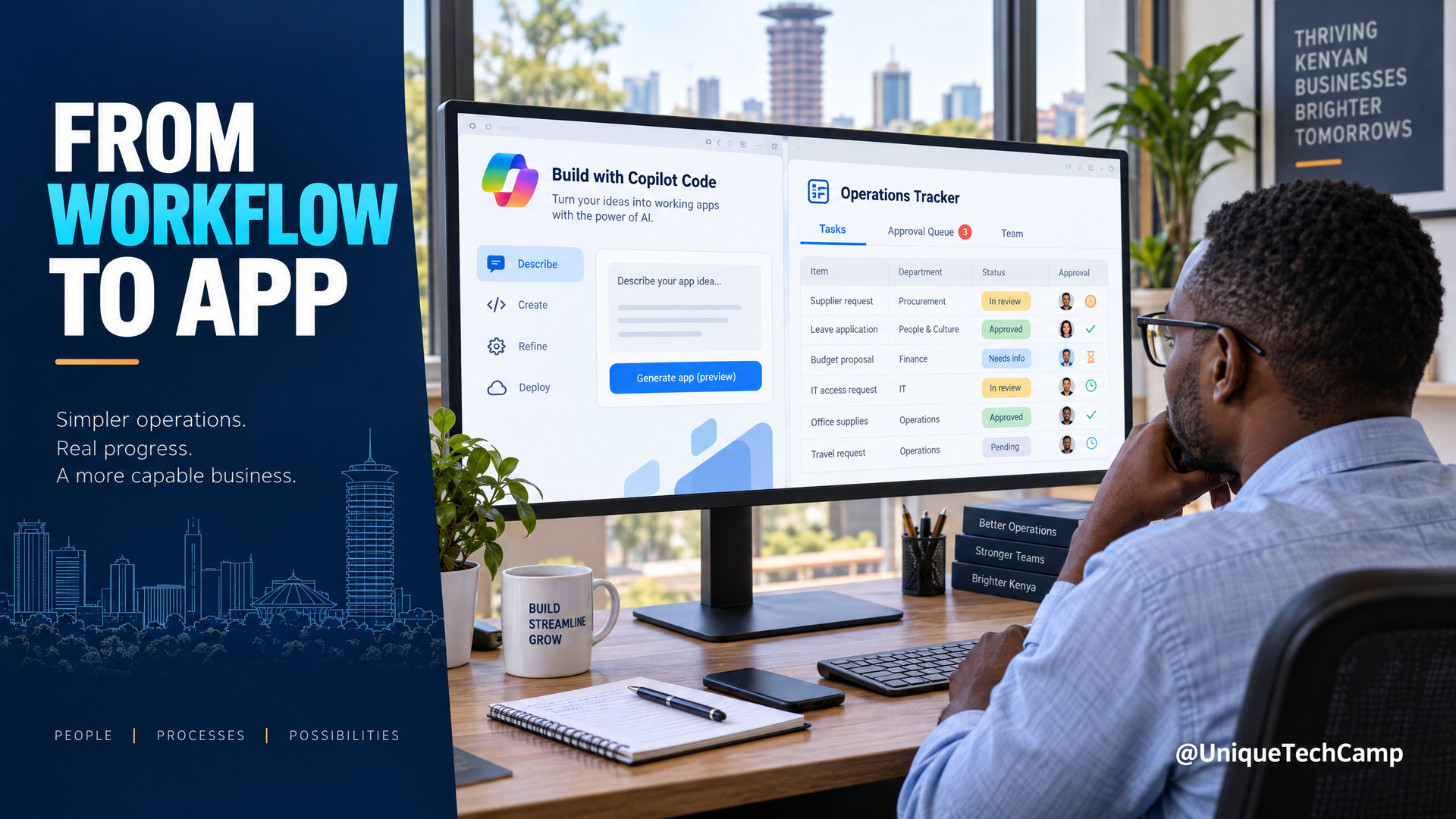
Microsoft Copilot Code for SMEs: A Practical Workflow-to-App Offer
Microsoft Copilot Code is still rolling out. Learn a practical workflow-to-app service for Kenyan SMEs, with verified pricing, usage limits and a safe pilot plan.

UniqueTechCamp Desk
Online • Reply < 5 mins