
ChatGPT Shopping Updates: A Product-Feed Guide for Kenyan Retailers
OpenAI added virtual try-on and saved shopping favourites to ChatGPT on 1 October 2026. Here is what Kenyan retailers can prepare, how product feeds work, and why local visibility is not yet guaranteed.
UniqueTechCamp Editorial
Lead Systems Architect • UniqueTechCamp Engineering Unit
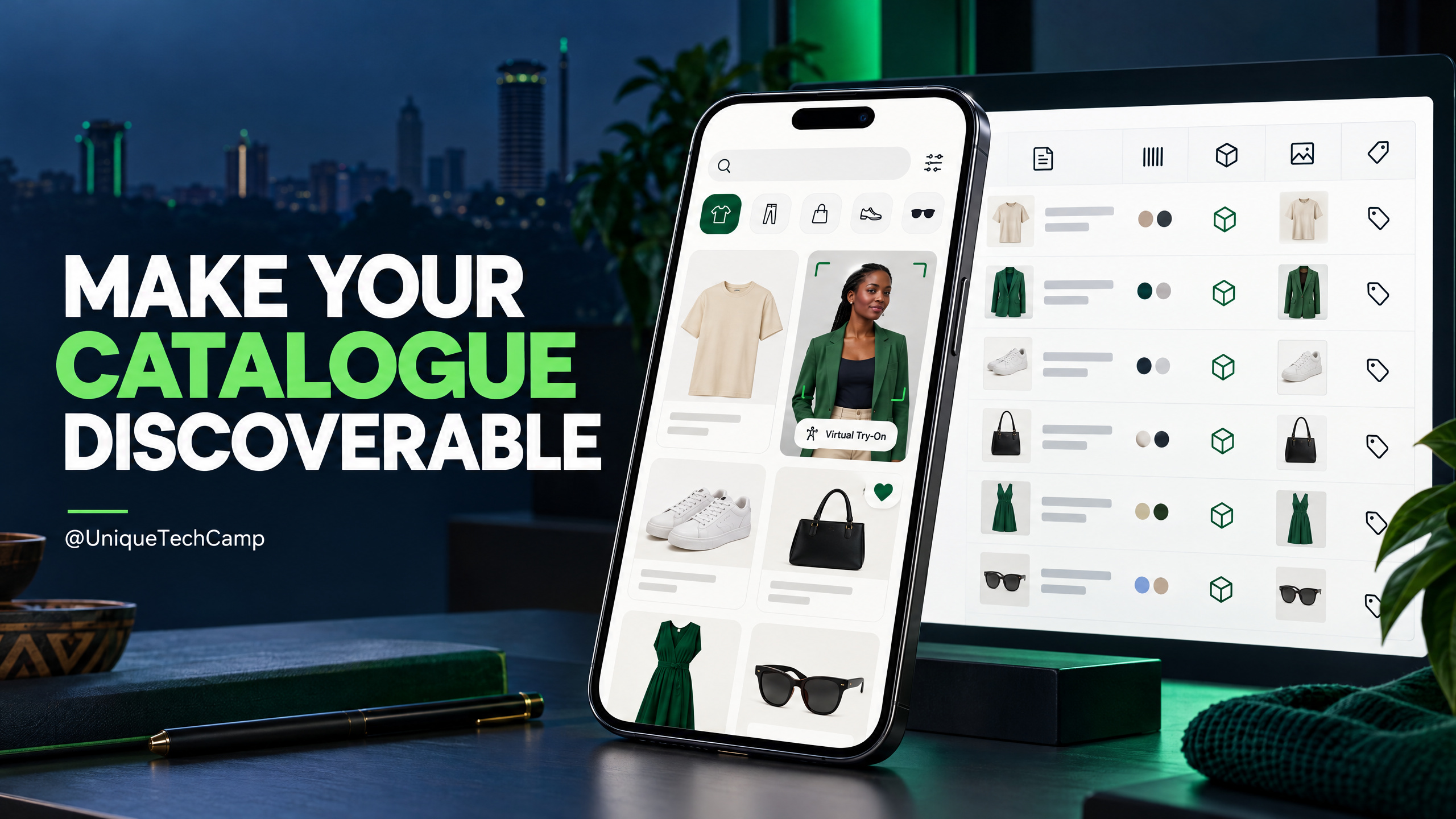
For many online shops, a product page is the final stop after a customer has already found what they want. That path is changing. Shoppers increasingly ask an AI assistant to compare options, describe a style or find a product, then follow a link to a seller. On 1 October 2026, OpenAI added virtual try-on for clothing and accessories and a way to save products in ChatGPT. The release is useful news for fashion and retail teams, but it is not a promise that every Kenyan shop will appear in ChatGPT results. OpenAI’s release notes record the 1 October shopping update .
The practical question for a Nairobi retailer is therefore not “Will this automatically bring more orders?” It is “If a shopper can discover or save one of our products, is the information accurate enough to earn a click and support a good buying decision?” OpenAI’s current merchant information says product shopping is live for users in the United States, while its feed specification says standard uploads target the US. A Kenyan retailer can prepare its product data and confirm eligibility, but should not assume local ChatGPT shopping exposure today. OpenAI’s merchant page explains current regional access and the feed programme .
What changed in ChatGPT shopping
The October update adds two shopper-facing actions. For clothing and accessory product listings, a “Try on” button lets a user take or upload a selfie and generate a visual preview with ChatGPT Images. Shoppers can save a product to Favorites or organise finds into folders in their ChatGPT Library. The app can retain a reference photo for future try-ons; the user can manage or delete it in Settings. These functions make a product result easier to explore and revisit, rather than adding a new store checkout or guaranteeing a sale. OpenAI’s shopping help page describes try-on, saved products and how shopping results work .
Independent reporting from TechCrunch also described the October release as a global rollout of the try-on and favourites functions. That does not mean the product-discovery market is global. OpenAI’s merchant page separately says shopping is currently live for ChatGPT users in the US, and its product-feed reference says the standard OpenAI upload targets the US. Those statements refer to different parts of the experience: an app interface can be present on mobile and web while product listings or merchant-feed access remain limited by market. TechCrunch’s launch report provides independent context on the new shopper features .
OpenAI’s public merchant page says Shopify and Etsy catalogues are already integrated, so their sellers do not need an extra application to share catalogue data. Other merchants can apply to provide a direct product feed, but the page says applicants are on a waitlist and a self-service merchant platform is planned later in 2026. The application form includes Kenya as a headquarters-country choice; that is not the same as approval, support for a Kenyan target market or visibility to Kenyan shoppers. The merchant programme page sets out the current application and regional position .
Why product data matters more than a launch headline
A product-feed is a structured record of what a shop sells. It gives a discovery service fields such as the product name, description, public page, seller, image, availability and price. If a colour or size is a separate buyable option, the data needs to identify that variant correctly. A feed is not merely a marketing summary: it has to match the item a customer can actually order.
OpenAI’s current product specification requires nine basic fields for each discovery-feed row: item_id, title, description, url, brand, seller_name, image_url, availability and price. It says to submit one row per purchasable item or variant, keep identifiers stable, use public product and image URLs, and send an explicit stock value. The documented availability values include in_stock, out_of_stock, pre_order, backorder and unknown. A missing or unrecognised value can cause a row to be rejected. OpenAI’s product-feed reference lists the required fields and their conventions .
For retailers, this work has value beyond one AI channel. The same clean data can make the website easier to maintain, reduce confusion between variants and help staff answer stock questions consistently. It also makes it easier to notice whether the site, point-of-sale system and marketing catalogue disagree. But do not treat a valid feed as a placement guarantee. OpenAI says products are selected according to relevance and available data, and not every product will necessarily appear.
A practical readiness workflow for Kenyan retailers
1. Confirm the market before assigning a team to integration. Read the current merchant page and ask OpenAI to confirm which seller, feed and destination-market options are available to your business. The current specification says standard OpenAI-format uploads target the US. Additional markets require a configured integration and OpenAI confirmation; the shared market fields described in the reference do not list Kenya. A Kenyan URL, local delivery note or price in Kenya shillings (KES) does not by itself select Kenya as a destination. Keep any application or access decision separate from normal website improvements.
2. Choose a manageable product group. Begin with a category that already has reliable stock and product pages, such as bags, shoes, homeware or accessories. A narrow review makes it easier to compare each feed row with the live item. Do not start by exporting the entire catalogue if the data contains old products, duplicate SKUs or options that are no longer sold. The goal is to make the source information correct before asking an external system to interpret it.
3. Standardise product identity and wording. Give each item or variant a stable ID. Write a concise title that names the product and, when helpful, the selected option. Use a plain factual description that explains material, dimensions, compatibility or other real buying details. Identify the actual brand and seller rather than using a generic placeholder. Keep the product page URL stable and make sure it opens the correct variant where possible. Do not put a temporary campaign price into the title or change an ID just because the price has changed.
4. Match every variant to its own page, image and stock status. If a dress comes in different colours and sizes, treat each purchasable combination as a variant in the feed. The specification describes a shared group ID plus a distinct item ID and a variant_dict for the selected options. Each row should carry the right URL, image, price and availability for that selection. Use a photograph that actually shows the selected colour or model. Keep size charts and return information on the merchant page: a generated try-on image is not a measurement tool.
5. Make price, currency and inventory agree. OpenAI’s feed reference asks for a current amount with an uppercase ISO currency code, and it says the currency must be the one agreed for the feed. Confirm the supported market and currency with the programme before changing how Kenyan prices are displayed. Set a process to update the feed when an item sells out, comes back into stock or changes price. The OpenAI Help Center warns that shopping prices can lag behind merchant changes, and the first price shown may not be the lowest available. Your own page must remain the final source of truth for what a customer pays.
6. Check public access and the mobile buying journey. Product pages and image URLs need to be publicly reachable. Test a product link on a mobile connection, confirm that the selected size or colour stays selected, and ensure that stock and delivery information are visible before checkout. For Kenyan customers, show the actual delivery areas, collection options, payment methods and returns route in clear language. A discovery card cannot compensate for a slow or confusing product page.
7. Keep the hand-off and ownership simple. Decide who owns product titles, stock updates, image changes and feed errors. If prices are maintained in a point-of-sale tool or spreadsheet, agree how those changes reach the website and any future feed. Give staff a simple way to report an incorrect description or an unavailable item. For a store selling in several markets, assign someone to confirm local currency, delivery and product eligibility before enabling a new destination.
If your team wants help mapping the catalogue, stock source and measurement plan before an AI integration, the AI Solutions Desk at UniqueTechCamp can help scope the workflow. The useful first output is a verified list of products and data owners, not a promise that a new channel will produce sales.
Measure readiness before claiming growth
Set a baseline using the shop’s existing search and referral sources. During a feed test, count how many selected products have all required fields, how many links and images load, and how often stock or price differs from the live page. Track feed rejections or missing variants where the merchant programme provides that information. These checks tell a team whether its catalogue is dependable enough to expose more widely.
If ChatGPT referrals become visible in analytics, compare product-page visits with add-to-cart and completed-order events. Where referrer information is unavailable or incomplete, do not attribute every sale to an AI assistant. Use campaign parameters only if the feed and store can preserve them without breaking canonical product URLs. Compare product categories like-for-like and include returns or exchanges caused by a misleading image, incorrect size option or stale availability. An increase in clicks alone is not evidence of a profitable channel.
Review this alongside the hours required to maintain product records, update images and resolve data errors. A discovery feed may be worthwhile when the catalogue is accurate and the integration fits the existing operating routine. If teams cannot keep stock and pricing current, fix that process first. No public launch note promises a specific amount of traffic or revenue for participating retailers.
Limits to keep in view
ChatGPT does not show every available product. OpenAI says it considers the shopper’s query and context, and it may use structured data from first-party or third-party providers. Product selection is not a guaranteed directory listing. The merchant page says product shopping is currently available to ChatGPT users in the US; the feed reference says standard file uploads target the US. OpenAI plans wider regional availability, but the sources reviewed do not confirm a live Kenyan destination market.
The display can also be imperfect. OpenAI warns that prices may be delayed and that its initial displayed price may not be the cheapest. Some labels and review summaries are generated from available information and are not verified by OpenAI. The try-on feature may not show a garment or person exactly and does not guarantee fit or size. A retailer should keep detailed product measurements, accurate variant images and a clear returns process on its own site.
Pricing information needs the same care. OpenAI’s merchant FAQ says there are no fees on purchases that start in ChatGPT, but the source does not say that every implementation, payment provider or retailer operating cost is free. The 1 October feature note does not state a separate price for try-on or saved products. Keep store-side processing costs in your own budget, and check the current terms before joining a programme. OpenAI’s merchant page describes merchant-owned site or app checkout as the default direction, while the Help Center still notes that some eligible listings may show an in-chat checkout option. Treat checkout capability as integration-specific and confirm its current status rather than designing around an assumed payment flow.
Finally, a saved favourite is a shopper’s personal planning aid, not a reservation or purchase commitment. A try-on image is a visual preview, not proof of colour accuracy, fit or fabric feel. Staff should not use generated previews as a substitute for real product photographs, measurements or a customer’s own judgement.
Frequently asked questions
Is ChatGPT shopping available to Kenyan shoppers?
OpenAI’s release note says the new try-on and saved-product features are available on mobile and web, but it does not list every country or plan. OpenAI’s merchant page says product shopping is currently live for users in the US, and its feed specification says standard uploads target that market. Do not assume a Kenyan store is discoverable to Kenyan ChatGPT users until OpenAI confirms the destination market. Check OpenAI’s current merchant availability information .
Does virtual try-on tell a customer whether clothing will fit?
No. OpenAI says try-on images may not represent the item or the person exactly and do not guarantee fit or size. Keep measurements, fabric details, variant photographs and return information on the product page. The ChatGPT shopping help page explains this limitation .
Do Shopify and Etsy sellers need to apply for a product feed?
OpenAI’s merchant page says Shopify and Etsy product catalogues are already integrated, so those sellers do not need an additional feed application. Other merchants can apply to share a direct feed, but access is subject to the current programme and market availability. OpenAI’s merchant page lists the current options .
What information does a product feed need?
The basic OpenAI discovery feed requires a stable item ID, product title, factual description, product URL, brand, seller name, image URL, availability and price. Variants need separate, consistent records. The product-feed reference provides the complete schema .
Does a feed guarantee that a product will appear, or that a sale will happen?
No. OpenAI says product selection depends on relevance and available data, and a feed’s eligibility does not guarantee display. A product click or saved favourite is not an order. Measure qualified visits and completed orders where attribution is available, and do not promise a revenue result.
Conclusion
ChatGPT’s October shopping update gives shoppers new ways to preview and save clothing and accessory finds. For Kenyan retailers, the immediate opportunity is not to assume a new source of orders; it is to make product information accurate, consistent and ready for a market that may expand. Verify access first, clean a small set of product records, keep the merchant page current and measure real visits and orders if the feature becomes available to your audience.
Need this built for your business?
If you run an online shop and want product pages, variants, stock data and checkout to work together, start with a scoped conversation through the AI Solutions Desk at UniqueTechCamp . You can book an e-commerce consultation to review the catalogue and technical requirements. For implementation of the store, product categories, inventory and payment flow, see E-commerce Setup .
Deploy An Autonomous AI Lead Gen System Today
We engineer high-converting web applications with integrated 24/7 WhatsApp qualification bots and multi-channel follow-up drips.
Related Strategy Articles

Gemini Small-Business Tools: A Safe Growth Pilot for Kenyan SMEs
Google's Gemini business page brings brand, finance and app tools together. A cautious pilot for Kenyan SMEs, with privacy and review checks.

Google Docs Captions and Cross-References for Kenyan SMEs
Use Google Docs captions, cross-references and caption tables to keep Kenyan SME reports and tender documents easier to navigate after edits.

ChatGPT for Sales: A Human-Reviewed CRM Pilot for Kenyan SMEs
OpenAI's new ChatGPT for Sales adds sales workflows. Learn how Kenyan SMEs can pilot CRM connections with human review, privacy checks and clear measures.

UniqueTechCamp Desk
Online • Reply < 5 mins